Sleep disorders are raging worldwide. Traditional therapies have long been plagued by the risks of drug dependence and cognitive impairment. The rise of OX2R-targeted drugs is tearing through the long dark night of sleep disorders!
OX2R-targeted drugs: a new blue ocean in the treatment of sleep disorders
In recent years, sleep disorders have evolved into a common health challenge across all age groups.
Epidemiological data show that with the increase of age, the public's sleep duration and quality show a significant deterioration trend. Specifically, only about 60% of people under 30 can maintain 8 hours or more of sleep per day, while more than half of people over 50 have insufficient sleep duration, and this group generally has a low subjective evaluation of sleep quality. This widespread sleep health crisis lies in the pathological disorder of the sleep-wake cycle.
According to the authoritative definition of the International Classification of Diseases (ICD-11), sleep disorders mainly cover five categories: insomnia disorder (characterized by difficulty falling asleep or early awakening), sleep-related breathing disorders (such as obstructive sleep apnea), central disorders of hypersomnolence (with narcolepsy as a typical representative), circadian rhythm sleep-wake disorders, and parasomnias (including abnormal behaviors such as sleepwalking and night terrors).
The therapeutic field for these diseases is undergoing revolutionary breakthroughs, among which new drugs targeting the orexin type 2 receptor (OX2R) show great clinical potential due to their unique mechanism of action. Compared with traditional drugs, OX2R-targeted therapy avoids the risks of drug dependence and cognitive impairment, realizing a model shift from "extensive neural inhibition" to "precision intervention in pathological mechanisms". Such drugs are divided into two categories according to their action directions: OX2R agonists and OX2R antagonists.
OX2R agonists are mainly used in the treatment of narcolepsy type 1 (NT1). Patients with this type of disease have impaired arousal signal transmission due to the loss of orexin neurons in the brain. Agonists directly compensate for the deficiency of endogenous orexin by selectively activating OX2R receptors, thereby reestablishing the sleep-wake balance. Basic research reveals that they maintain the awake state by acting on the tuberomammillary nucleus (TMN) and regulate the ventrolateral periaqueductal gray (vlPAG) to inhibit cataplexy attacks. OX2R antagonists, on the other hand, target the pathological core of insomnia. By blocking the binding of orexin to receptors, they inhibit overactive arousal signal pathways and induce physiological sleep processes. This mechanism not only avoids the next-day residual effects and respiratory depression risks of traditional drugs but also marks the beginning of the era of individualized precision treatment.
R&D race of OX2R agonists focuses on hypersomnia 10. Patients with narcolepsy type 1 (NT1) suffer from severe symptoms such as excessive daytime sleepiness (EDS), cataplexy, and cognitive impairment. Existing therapies can only partially relieve some symptoms and cannot solve the fundamental problem of orexin deficiency. Therefore, the research and development of oral agonists targeting orexin type 2 receptor (OX2R) has become a core competitive battlefield in the field of hypersomnia treatment. According to incomplete statistics, there are 14 oral selective OX2R agonists in active R&D worldwide, among which 8 have entered the clinical stage and 6 are in the preclinical stage.
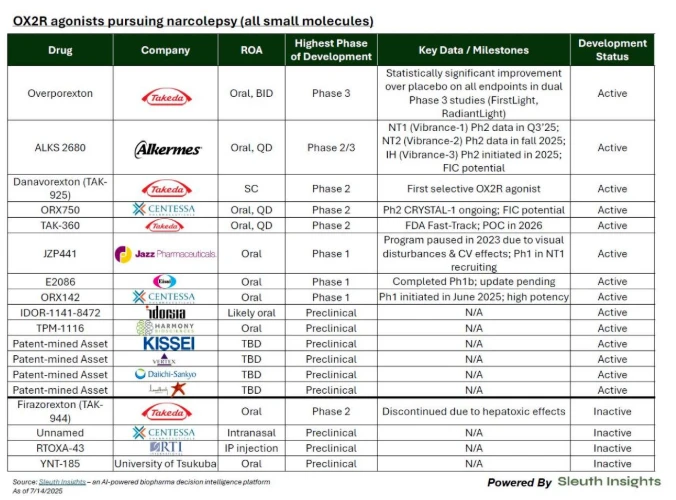
Figure 1 Pipeline of oral agonists targeting orexin type 2 receptor (OX2R) under research Source: Sleuth insight
Among them, Takeda has established a significant leading position in this track with its Oveporexton (TAK-861). Oveporexton (TAK-861) is currently the fastest-progressing oral OX2R agonist, having completed two key global phase III studies (FirstLight & RadiantLight), involving 273 NT1 patients in 19 countries. Both studies met all primary and secondary endpoints at week 12 with high statistical significance (p < 0.001). Data show that TAK-861 not only significantly improves EDS but also greatly reduces the frequency of cataplexy, and improves attention, quality of life, and daily functions, bringing multiple clinical indicators close to the normal range. It has good safety and overall tolerability consistent with phase IIb, with no treatment-related serious adverse events reported.