The ability of cells to convert mechanical alterations into biological responses, a process called mechanotransduction, plays an important role in the progression of solid tumors such as breast cancer. It is well known that common mechanical alterations in cancer progression primarily involve tissue hardening, which is what is detected during self-examination or breast palpation to detect underlying tumors. The stiffening of breast tissue induces a series of cascading effects, including the creation of intracellular tension and distortion of the nucleus, which ultimately activates the expression of genes responsible for controlling cellular proliferation. expression of genes that are closely linked to tumor growth.
Recently, a study entitled "The laminin-keratin link shields the nucleus from mechanical deformation and signaling" was published in the international journal Nature Materials. In a recent study published in the international journal Nature Materials entitled "The laminin-keratin link shields the nucleus from mechanical deformation and signalling", scientists from the University of Barcelona and other institutions revealed a special cellular mechanism that is important for slowing down the progression of breast tumors, in which the researchers found that the laminin protein can hinder the cellular mechanotransduction process and thus protect the nucleus from deformation, and that the laminin-keratin link is an important mechanism for healthy breast tumors. Laminin is a specialized protein that provides structure and support to healthy breast tissue.
Researcher Zanetta Kechagia explains, "Our study shows that the presence of laminin reduces the effects of tissue stiffness and thus effectively protects cells from tumor growth; we have also demonstrated this mechanism in vitro, but we believe it has potential for in vivo application given the results observed in samples from breast cancer patients. Through this mechanism, researchers can then hope to block the invasion of tumor cells, which will hopefully lead to the further development of more sensitive diagnostic tools and even novel therapies for breast cancer, however, they will need to explore these possibilities in the later stages of their research.
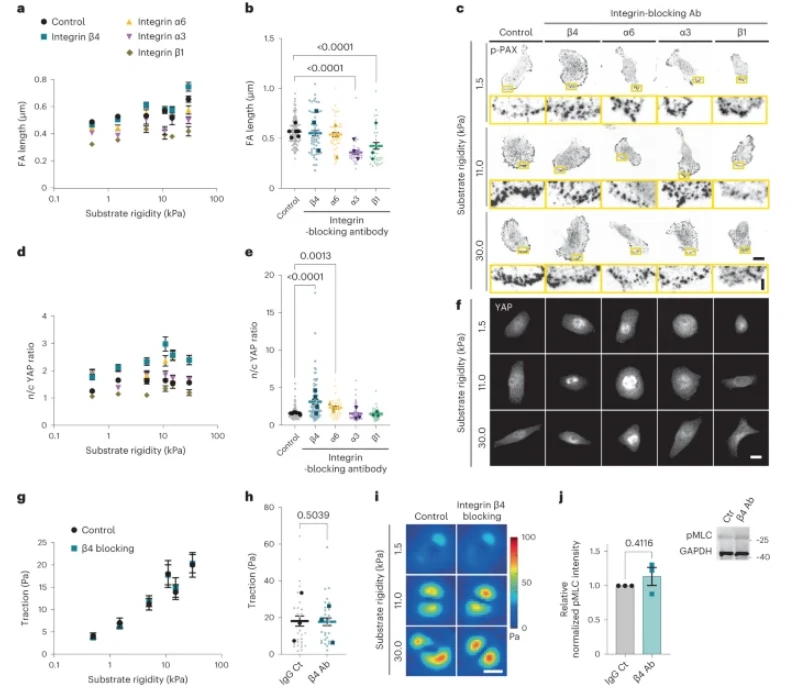
Preventing tissue response to stiffness or slowing breast tumor progression is key.
Image from: Nature Materials (2023). DOI:10.1038/s41563-023-01657-3
Now researchers have demonstrated that increased tissue stiffness induces mechanical responses within the cell, the most common of which are related to changes in the cytoskeleton, which affects its interactions with surrounding tissues and facilitates cell migration; in addition, this stiffness leads to the activation of YAP proteins, which are able to enter the nucleus of the cell and turn on the expression of genes associated with cell proliferation. To study the mechanotransduction process, the researchers cultured breast tissue cells on gels of different hardnesses, thus simulating healthy (softer) and malignant (harder) tissues, and they compared the differences in the behavior of the cells on gels coated with laminin to those on gels coated with collagen or fibronectin, another cell-supporting protein overproduced in the carcinogenesis process.
Thus, the researchers observed that cells seeded on laminin-rich gels had a very slight mechanical response to substrate stiffness compared to those seeded on collagen-rich or fibronectin-rich gels, and the mechanical response to substrate stiffness was not as pronounced. Taken together, the present study reveals the molecular mechanisms by which organismal tissues regulate their sensitivity to mechanical signals.