Recently, Arvinas and Pfizer announced that they have submitted a New Drug Application (NDA) to the U.S. FDA for Vepdegestrant, intended for the treatment of patients with ESR1-mutated ER+/HER2- advanced or metastatic breast cancer. This marks the world's first PROTAC drug to be submitted for market approval.
PROTAC (Proteolysis-Targeting Chimera), as a new generation of targeted protein degraders, redefines the boundaries of drug design with its sophisticated "molecular sandwich" structure. A PROTAC molecule uses a linker to connect one end that binds to the target protein and the other end that recruits an E3 ubiquitin ligase. This process tags the target protein with ubiquitin, cleverly hijacking the ubiquitin-proteasome system to degrade the target protein.
Thanks to its unique mechanism of action, PROTAC has become a hot research direction in innovative drug development. It has garnered significant industry attention, particularly for targeting "undruggable" proteins, and is regarded as one of the most promising new technologies to break through the current bottlenecks in small-molecule drug development.
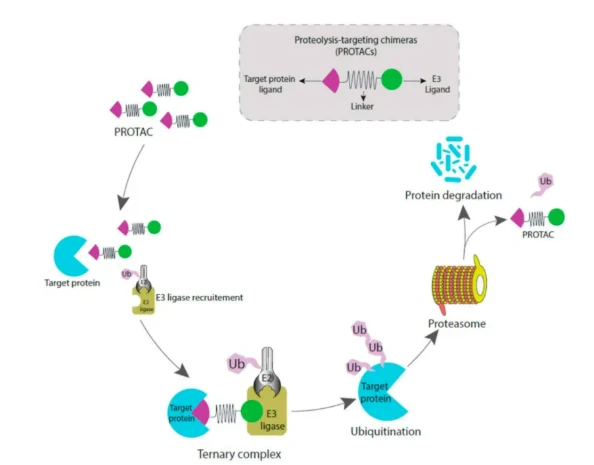
Figure 1. Mechanism of PROTAC-mediated ubiquitination and proteasomal degradation of target proteins
Historical Evolution:
From Laboratory Exploration to Clinical Breakthroughs
Since the Crews team synthesized the first MetAP2-degrading PROTAC in 2001, the field has undergone a paradigm shift from the "peptide-based era" to the "all-small-molecule revolution." Early peptide-based PROTACs, while offering targeting advantages, faced challenges such as large molecular size, peptide bond instability, and difficulties in synthesis and purification. Subsequently, researchers adopted an all-small-molecule PROTAC design. These all-small-molecule PROTACs use small molecule ligands to recruit both the target protein and E3 ubiquitin ligase, enabling rapid targeted protein degradation while offering improved stability, cell permeability, and synthetic feasibility.
In 2019, ARVINAS, a company founded by Crews, initiated the world's first clinical trial for an androgen receptor PROTAC designed to treat prostate cancer, marking the beginning of the clinical translation era.
Today, the submission of Vepdegestrant for market approval represents a major milestone in the journey of targeted protein degradation technology from concept validation to clinical application.
According to data from Yaozh.com, as of now, in addition to Vepdegestrant, over 270 PROTAC-based new drugs are in the global R&D pipeline, with 33 already in clinical stages, highlighting the vigorous growth of this field.
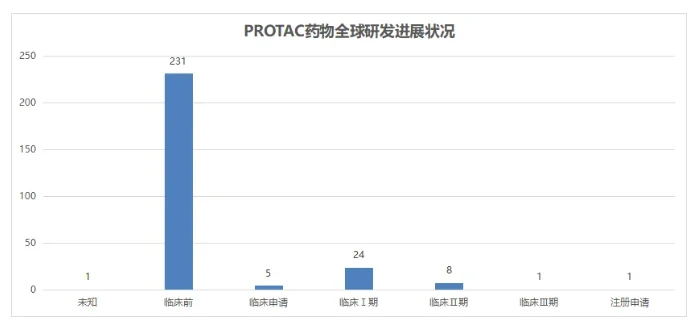
Figure 2 Global R&D Progress of PROTAC Therapeutics
Metabolic Puzzles: The Hidden Challenges in PROTAC Development
Although PROTACs offer numerous advantages in terms of drug-like properties, their novel mechanism of action presents unique risks when applying conventional small-molecule preclinical development strategies. In 2023, the Targeted Protein Degradation Working Group of the International Consortium for Innovation and Quality in Pharmaceutical Development (IQ) conducted a survey involving 18 companies engaged in the development of targeted protein degraders. The study aimed to identify the most critical R&D challenges recognized during the preclinical development stage (Figure 3).
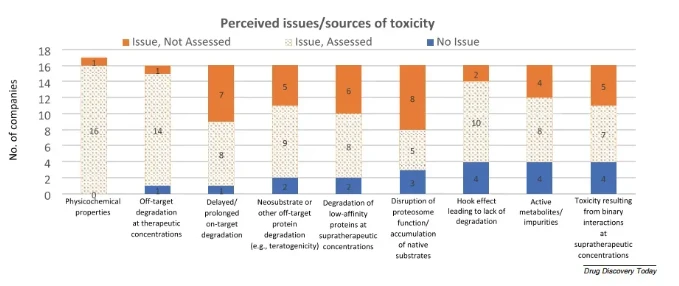
Figure 3 Global Distribution of Key Challenges in PROTAC R&D
The majority of companies consider physicochemical properties to be an important research focus, and all have conducted evaluation studies in this area. The remaining issues are all related to the safety studies of PROTACs. Seventy-five percent of companies believe that research on the off-target toxicity of PROTACs and their metabolites is very important; however, 30% of companies have still not conducted evaluation studies, possibly due to a lack of effective assessment methods. Similar to the teratogenic effects of thalidomide on fetuses, off-target effects are not easily detected or tracked in non-clinical toxicity studies.
The study of PROTAC metabolic characteristics and metabolites is more complex than that of small molecules. Factors such as the type of E3 ligase in the PROTAC structure, the stability of the POI ligand, the length of the linker, the connection sites, and variations in rigidity/flexibility all influence PROTAC metabolism. Therefore, when studying the metabolic characteristics and metabolites of PROTAC molecules, it cannot be simply based on the sum of the metabolic characteristics of their individual ligand parts.
Metabolic Decoding: From Experimental Exploration to Intelligent Prediction
A pioneering study by Goracci's team in 2020 in the Journal of Medicinal Chemistryrevealed the complex landscape of PROTAC metabolism: factors such as linker configuration, ligand stability, and spatial rigidity together form a intricate metabolic network.
The study showed that shortening the linker length or introducing rigid structural units (such as biphenyl groups) can significantly improve metabolic stability. This finding is highly consistent with the algorithmic deductions of the optADMET druggability prediction platform (Figure 4). This platform utilizes deep learning models to predict key parameters such as metabolic stability, metabolites, and their proportions.
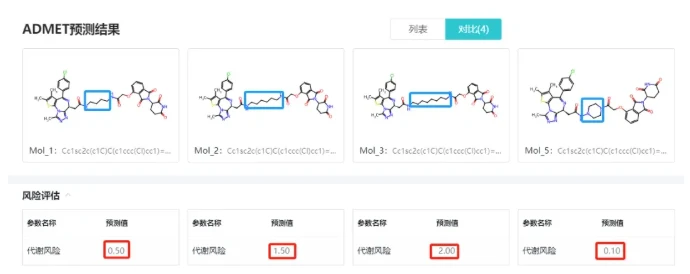
Figure 4. Metabolic Stability Prediction for Linker Structural Optimization by the optADMET Platform
As a new class of compound molecules, the metabolic products of PROTAC molecules differ significantly from those of their individual components. Taking the metabolism of the molecule shown in Figure 5 below as an example, literature studies indicate that the metabolic products of PROTACs are primarily concentrated in the linker. Our predictions using the optADMET druggability prediction platform are largely consistent with the literature findings, and the results are shown in Figure 6.
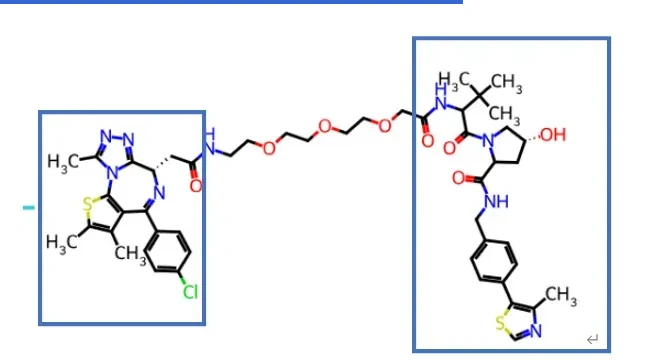
Figure 5. Schematic diagram of the target PROTAC molecular structure.
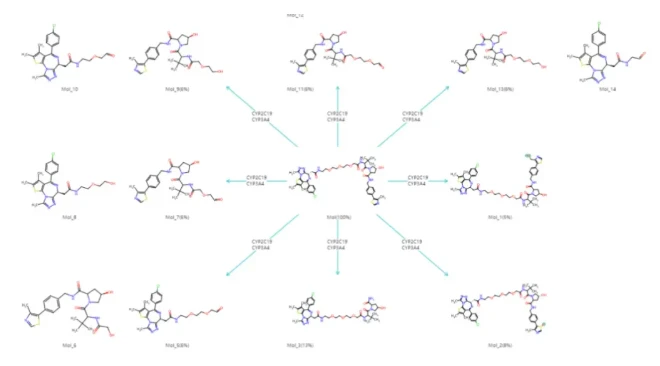
Figure 6. Prediction results of the optADMET druggability prediction platform.