Women diagnosed with ovarian cancer may initially respond well to chemotherapy, but most of them soon develop resistance to the therapy and eventually die from the disease. Recently, an article published in the international journal Advanced Science titled "Nanoparticle Targeting in Chemo-Resistant Ovarian Cancer Reveals Dual Axis of In a study published in the international journal Advanced Science entitled "Therapeutic Vulnerability Involving Cholesterol Uptake and Cell Redox Balance," scientists from Northwestern University and other institutions have discovered the Achilles heel of chemo-resistant ovarian cancer (the need for cholesterol) and how to exploit it. cholesterol) and how this can be exploited to destroy ovarian cancer.
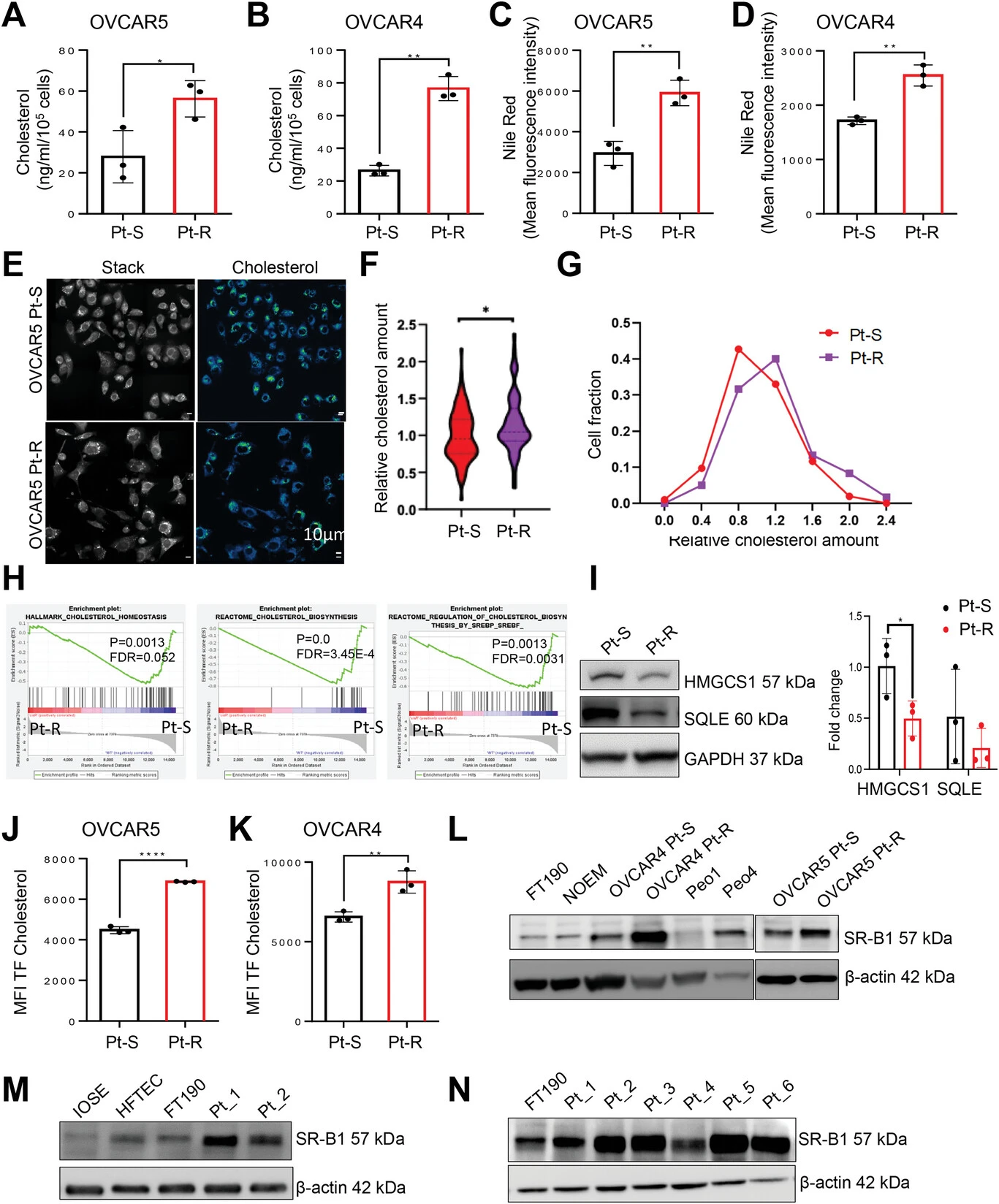
In this study, the researchers found for the first time that chemotherapy-resistant ovarian cancers and tumors are enriched with cholesterol due to increased intake, and then they deployed a synthetic nanoparticle that appeared to be a naturally occurring cholesterol-enriched nanoparticle to the cancer cells. But when the cancer cells bind to this fake nanoparticle, it blocks their intake of cholesterol, and in addition, the researchers found that lowering cholesterol levels might be able to coax the cancer cells onto the path of cell death, and that therapies based on this nanoparticle might be able to reduce the growth of ovarian cancers by more than 50 percent in both human cells and animal models.
Scientists hope to use nanoparticle therapy to ward off chemotherapy-resistant ovarian cancer cells
Image from: Advanced Science (2024). DOI:10.1002/advs.202305212
This is a new weapon for destroying drug-resistant ovarian cancer, said researcher Prof. C. Shad Thaxton. With more than 18,000 women dying from ovarian cancer in the United States every year, finding ways to attack drug-resistant cancer cells is especially important. The way cells die after treatment with these nanoparticles is cell death caused by lipid oxidation in the cell membrane. These cells can develop some tolerance to the typical mode of cell death (apoptosis), which is why chemotherapy cannot kill them.
The findings in this paper on ovarian cancer are based on scientists' earlier work using nanoparticles to treat human lymphomas; and the results of this paper suggest that this approach may also be effective in treating ovarian cancer. Now that the researchers, Matei and colleagues, have tested the nanoparticles in ovarian cancer cells and in xenograft animal models carrying chemotherapy-resistant ovarian cancer, the next step will be to test the therapeutic efficacy of the nanoparticles in combination with conventional chemotherapy and to analyze the effect of the nanoparticles on immune cells that defend against cancer.