On March 2, Roche officially announced that its investigational Bruton's tyrosine kinase (BTK) inhibitor, fenebrutinib, successfully met the primary endpoint in a pivotal Phase III clinical study (FENhance 1) for relapsing multiple sclerosis (RMS). This means fenebrutinib has now passed all three of its key Phase III trials, giving Roche a highly impactful trump card in hand.
Image source: Roche official website
According to information disclosed by Roche, among patients with relapsing multiple sclerosis (RMS), fenebrutinib demonstrated a significant 51% reduction in annualized relapse rate (ARR) compared with teriflunomide, over a treatment duration of at least 96 weeks. This result echoes the 59% ARR reduction observed in the earlier FENhance 2 study. Roche even provided a striking comparison: combining data from both studies, the effect is roughly equivalent to "one relapse every 17 years."
Multiple sclerosis (MS) is a chronic autoimmune disease in which the immune system mistakenly attacks the myelin sheath of the central nervous system (the brain and spinal cord), leading to inflammation, demyelination, and impaired nerve signal transmission. Common symptoms include blurred vision, numbness and weakness in the limbs, extreme fatigue, balance problems, and cognitive impairment. In severe cases, it can result in permanent disability.
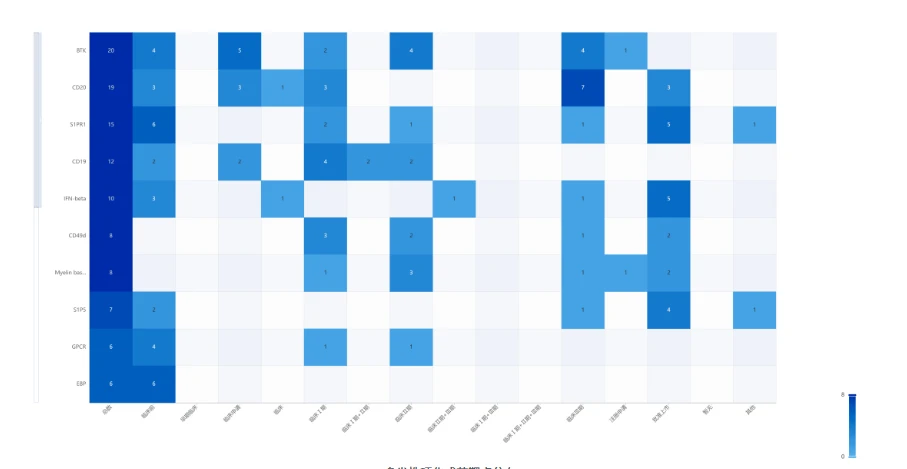
▲ Distribution of Approved Drug Targets for Multiple Sclerosis
Image source: Pharma Intelligence – Global Drug Analysis System
For a long time, the treatment landscape for MS has been dominated by disease-modifying therapies (DMTs). In the early days, these were mainly injectable agents such as interferons and glatiramer acetate. Later, oral medications such as teriflunomide, fingolimod, and siponimod gradually became more widely used. High-efficacy monoclonal antibodies, such as Roche's Ocrevus (ocrelizumab), have become the gold standard for both relapsing multiple sclerosis (RMS) and primary progressive multiple sclerosis (PPMS). However, most of these drugs are administered via intravenous infusion or subcutaneous injection, requiring patients to visit the hospital monthly or every six months-posing a major challenge to treatment adherence.
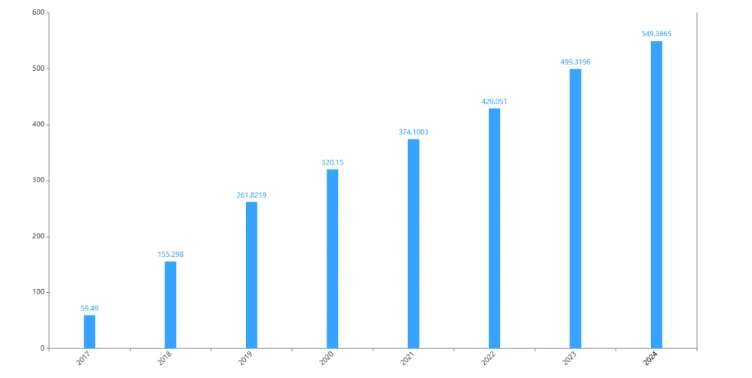
▲ Ocrevus Annual Global Sales
Image source: Pharma Intelligence – Global Top-Selling Drugs Sales Data
The standout feature of fenebrutinib is that it is an oral formulation and can effectively cross the blood–brain barrier. It not only inhibits peripheral B cells but also reaches the central nervous system directly, providing coverage for both relapsing multiple sclerosis (RMS) and primary progressive multiple sclerosis (PPMS). In the field of MS, which has long been dominated by injectable drugs and monoclonal antibodies, this is undeniably a game-changer. Roche's Chief Medical Officer, Levi Garraway, said plainly: "These positive results further confirm the potential of fenebrutinib, and Roche plans to submit a marketing application to regulatory authorities as soon as possible." The full data set for fenebrutinib will also be presented at the 2026 American Academy of Neurology (AAN) Annual Meeting.
(Disclaimer: This article is intended solely for the purpose of information dissemination and does not represent the views of this platform. It is not a recommendation for any treatment regimen. For guidance on treatment options, please consult a qualified medical professional at a reputable hospital.)