In Alzheimer's disease, aberrant sensory receptor function impairs microglia danger-associated molecular pattern (DAMP) clearance and exacerbates disease pathology manifestations; although external signals, including interleukin-33 (IL-33), can help to restore DAMP clearance in microglia, during phagocytosis clearance, researchers do not know how sensory receptors are regulated and interact with the DAMP interactions.
Recently, a study entitled "The VCAM1-ApoE pathway directs microglial chemotaxis and alleviates Alzheimer's disease pathology" was published in the international journal Nature Aging. In a study published in the international journal Nature Aging entitled "The VCAM1-ApoE pathway directs microglial chemotaxis and alleviates Alzheimer's disease pathology," scientists from the Hong Kong University of Science and Technology (HKUST) and other institutions have found that a cell-surface protein called VCAM1, found on immune cells in the brain, may serve as a therapeutic target for Alzheimer's disease, and may be expected to help develop novel therapies against the disease.
Alzheimer's disease is a devastating neurodegenerative disease that affects more than 50 million people worldwide. A key pathological hallmark of the disease is the accumulation of beta-amyloid plaques in the brain, which can lead to a progressive decline in cognitive function, and microglia, which are resident immune cells in the brain, are thought to play a key role in the clearance of damaged beta-amyloid proteins from the brain in the course of Alzheimer's disease. protein clearance in Alzheimer's disease.
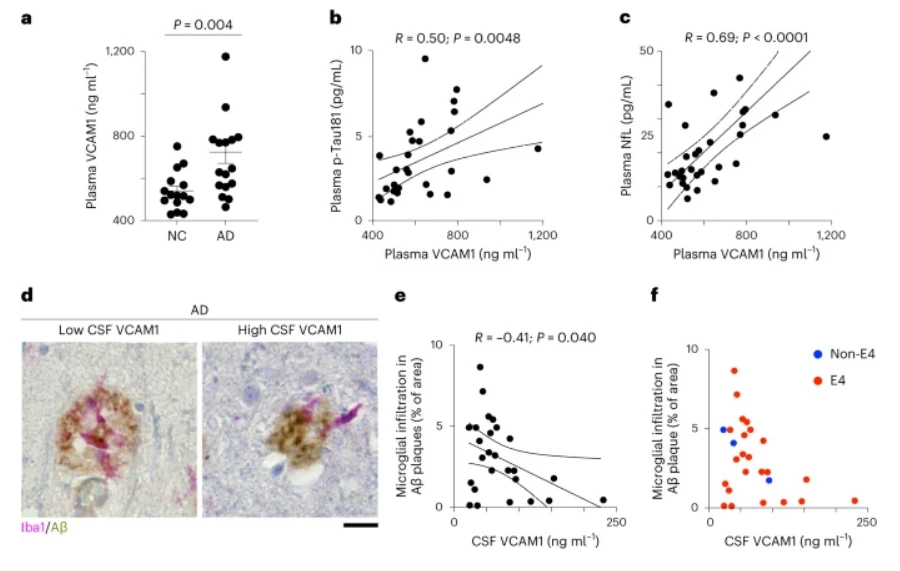
Scientists discover potential targets for developing novel Alzheimer's disease.
Image credit: Nature Aging (2023). DOI:10.1038/s43587-023-00491-1
In this study, the researchers sought to begin to investigate how microglia control beta-amyloid clearance and how it becomes dysfunctional in Alzheimer's disease, and upon further study they found that the VCAM1 protein may mediate the migration of microglia toward beta-amyloid and promote beta-amyloid clearance in microglia. In addition, the researchers found that ApoE, another protein present in beta-amyloid plaques, may bind to VCAM1 to mobilize microglia to move to beta-amyloid plaques, and that stimulation of the VCAM1-ApoE pathway may reduce Alzheimer's disease pathology in a mouse model. manifestations, these findings suggest that appropriate VCAM1 function is critical for microglia migration and β-amyloid clearance.
The researchers also analyzed the function of VCAM1-expressing microglia in the brain tissue of patients with Alzheimer's disease. Interestingly, patients with Alzheimer's disease have elevated levels of soluble VCAM1 in their cerebrospinal fluid, which may indicate abnormal VCAM1-ApoE signaling function, an observation that may be related to reduced clearance of beta-amyloid by microglia. The results of this study reveal that the VCAM1-ApoE signaling pathway may be present in the pathogenesis of Alzheimer's disease, and that VCAM1 could also serve as a potential target for novel therapies for Alzheimer's disease.
The results not only expand scientists' understanding of the disease pathology of Alzheimer's disease, but also provide ideas and targets for the development of novel disease interventions; although there is an urgent need for researchers to develop effective disease-modifying therapies, they first need to identify the correct drug targets, and they will continue to strive to utilize innovative approaches to achieve this at a later stage. In summary, the results of this paper suggest that promoting VCAM1-ApoE-dependent microglial cell function may be able to improve pathological manifestations in patients with Alzheimer's disease.