On a regular basis, many fitness enthusiasts have their own strict diet and food choices in order to maintain better performance during exercise and a balance of fat and muscle. One of the more common food choices in a fitness meal is whole grains, nuts, fruits and white meats (chicken, duck, fish, etc.) that are low in oil and salt, while reducing the intake of sugar. Recently, new research from the UK has confirmed that a healthy diet similar to a fitness meal can effectively extend life expectancy by an average of around 10 years.
In the UK, unhealthy diets are responsible for more than 75,000 premature deaths each year, including 17,000 in the 15-70 age group. The UK is currently focusing on dietary research and social guidance to reduce the risk of all-cause mortality due to unhealthy diets across the UK, to reduce unnecessary population loss, and to safeguard the demographic and social structure for long-term sustainability.
The research paper "Life expectancy can increase by up to 10 years following sustained shifts towards healthier diets in the United Kingdom" was published on November 20 in Nature Food. In "Life expectancy can increase by up to 10 years following sustained shifts towards healthier diets in the United Kingdom", published in Nature Food on November 20, Lars T. Fadnes et al. developed a state-of-the-art dietary assessment model to estimate the increase or decrease in life expectancy for different ages and genders for the intake of common food groups. This is an important reference and guidance for dietary restructuring for the whole population in the United Kingdom, and it can also be an inspiration and transferable reference for us and other countries.
The results of this study suggest that dietary patterns associated with longevity are moderate intakes of whole grains, fruits, fish and white meat, as well as milk and dairy products, vegetables, nuts and legumes; and lower intakes of eggs, red meat, sugary drinks, refined grains and processed meats. Unhealthy dietary patterns (i.e., those in the highest quintile of all-cause mortality) were no or very low intake of whole grains, vegetables, fruits, nuts, legumes, fish, milk and dairy products, and white meat, and high intake of processed meats, eggs, refined grains, and sugary beverages. The highest positive associations with all-cause mortality were with sugary drinks and processed meats, while the strongest negative associations with mortality were with whole grains and nuts. In other words, high intake of sugary beverages and processed meats is the biggest killer in reducing life expectancy. In contrast, moderate intake of whole grains and nuts is most beneficial for increasing life expectancy.
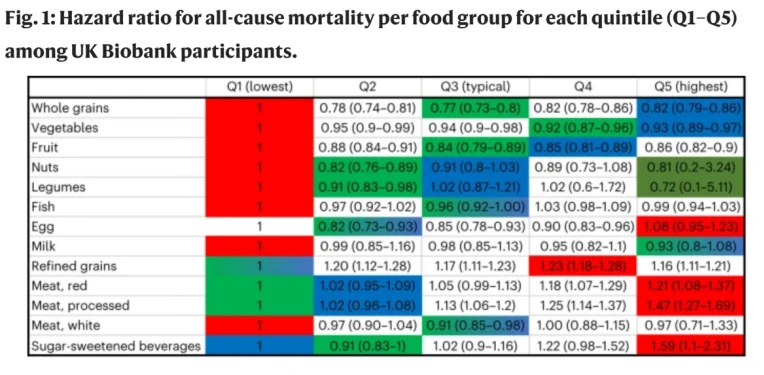
Figure 1: Risk ratios for all-cause mortality for each quintile (Q1-Q5) of food groups among UK Biobank participants. Source: nature.com
As shown in Figure 1, the data therein represent the risk ratios for all-cause mortality corresponding to quintiles of percent intake of different food groups. For example, the Q1 corresponding to whole grains represents intake of whole grains as less than 20% of all food intake, Q2 corresponds to 20%-40%, and so on Q3 is 40%-60%, Q4 is 60%-80%, and Q5 is 80%-100%. The reference group is the lowest quintile of intake for each food group, i.e., the interval below 20% intake, and the risk of all-cause mortality in this interval is set to 1. Thus, other intervals that show a risk ratio below 1 respond to a lower risk of death, and those above 1 show a higher risk of all-cause mortality. The analysis was statistically adjusted accordingly for age, sex, regional socio-demographic deprivation, smoking, alcohol consumption and physical activity levels. In the graph, unhealthy intake intervals are shown in red, while intake of food groups that have a robust benefit on life extension is shown in green (not dark green).
It is easy to see from the graph, then, that too little intake (below 20% of dietary intake) of whole grains, vegetables, fruits, nuts, and fish has a high risk of death, while too much intake (above 80%) of processed meats, red meats, and high-sugar beverages greatly elevates the risk of all-cause mortality. A reasonable intake of whole grains, vegetables, fruits, and meat in the Q2-Q4 range is associated with lower mortality and better health.
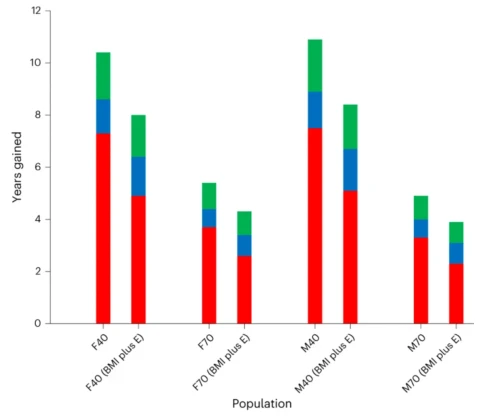
Figure 2: Years of life expectancy from dietary changes. Source: nature.com
The UK Eatwell Guidelines, which correspond to the correlation between dietary structure and all-cause mortality studied in Figure 1, set out the corresponding dietary guidelines. The study further analyzed the predicted life expectancy of women and men at age 40 and 70 years, respectively, after dietary modification in accordance with the Eatwell guidelines. In Figure 2, the dietary structure is shown as F40 and M40 for women and men at age 40 years and F70 and M70 for women and men at age 70 years, respectively, with the red, blue and green colors corresponding to the dietary structure of the three colors in Figure 1, respectively. Meanwhile, in a sensitivity analysis, the study found that most of the foods were similarly associated with different genders, but white meat seemed to be more beneficial for women.
Thus, consuming fewer sugary drinks and processed meats and more whole grains and nuts could maximize life expectancy. At the same time, it's no surprise that life expectancy increases less when dietary changes are initiated in older age. That said, the earlier the adjustment to a healthy diet, the greater the magnitude of the extension and gain in life expectancy. For the middle-aged British adults shown in the study, sustained dietary improvement would be expected to increase life expectancy by about 3 years for both women and men. More importantly, for those whose dietary patterns are themselves very unhealthy, changing dietary patterns is expected to increase life expectancy by about 10 years. The later dietary improvement is initiated, the less life expectancy is increased.
The UK Government's current approach to the food strategy emphasizes shared responsibility, with industry having a responsibility to promote and supply healthier foods and government having a responsibility to develop targeted regulatory interventions. Consumers have the right to access healthier food and be better informed about healthier choices. This brings important references for us and for countries around the world in terms of individual consumerism, as well as social and industry development.