There is no way to raise the body's platelet count other than through blood transfusions, which may put some populations at risk of uncontrolled bleeding, so can something as simple as a change in diet raise the platelet count in individuals with low platelet levels? For example, cancer patients undergoing chemotherapy. Recently, an article published in the international journal Nature Cardiovascular Research entitled "Efficient megakaryopoiesis and platelet production require phospholipid polyunsaturated fatty acids (PUFAs, as found in the Mediterranean diet) may increase platelet counts in mice.
In contrast, mice fed a diet high in saturated fatty acids may have lower platelet counts, said researcher Machlus, adding that we were really surprised at how far-reaching the effects were, given that our lab focuses on platelets and their precursor cells, megakaryocytes, and the methods that drive the body to increase platelet production. the body to increase platelet production. Equally interesting is the apparent reason for the dietary effect. What reminded the researchers of the idea of diet is that megakaryocytes, when they form platelets, create frequent stretches in their membranes, and we think that there must be an unusual component of this membrane that makes it so fluid.
No scientists had studied megakaryocyte membranes before, perhaps because they are difficult to obtain from bone marrow, so in this study, researchers Machlus et al. decided to utilize lipidomics to fully assess the lipid content of cell membranes for the first time, Machlus said. especially before they start making platelets, which we believe provides the necessary flow properties for membrane movement and remodeling. In culture, megakaryocytes with high levels of PUFAs in their cell membranes produce more platelets, and platelet production declines when the cells use saturated fat as a source of lipids, and the same thing happens when the researchers add special compounds to inhibit the uptake of PUFAs from the blood.
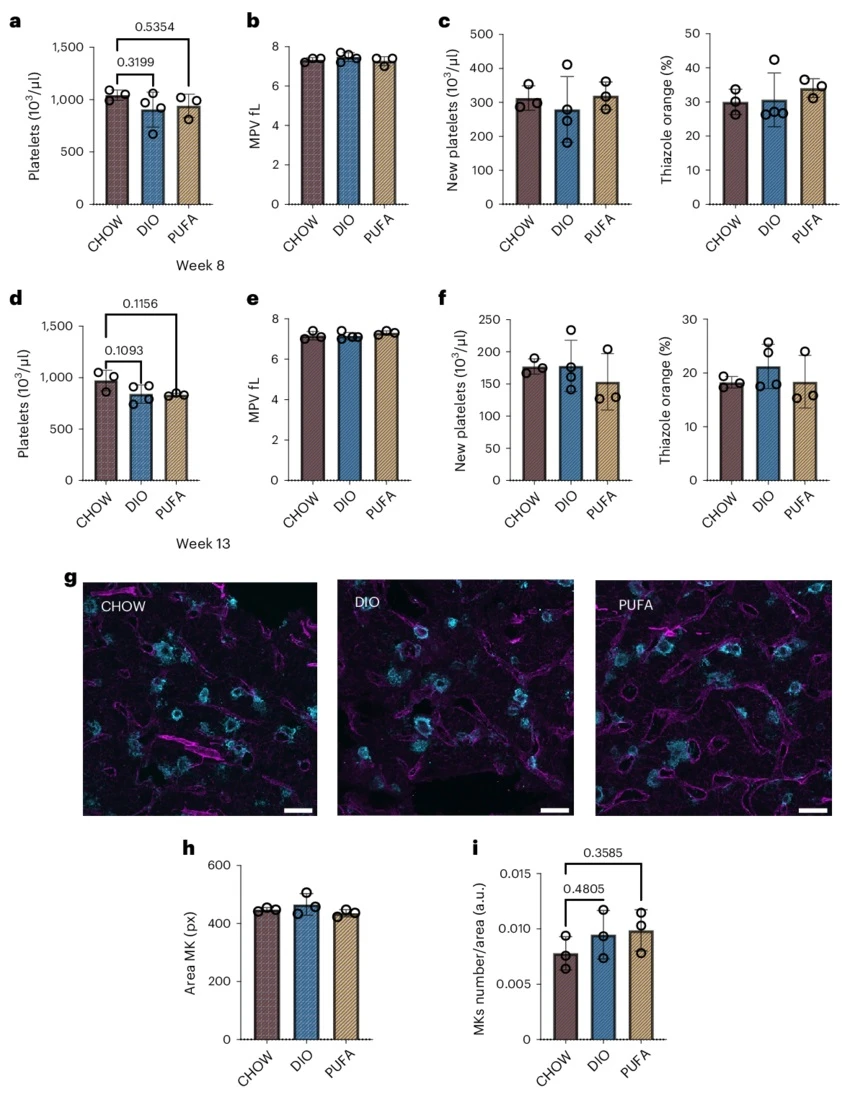
It's not just blood transfusions that can raise an organism's platelet count Proper dietary fat or can as well.
Image from: Nature Cardiovascular Research (2023). DOI:10.1038/s44161-023-00305-y
The researchers also identified the receptor in megakaryocytes responsible for the uptake of PUFAs from the blood - CD36 - and when the gene encoding CD36 was knocked out in a mouse model, those animals had low platelet counts. So the researchers connected the dots with human studies, and by collaborating with researchers from the United Kingdom, they identified a particular family in which several family members carried mutations in the CD36 gene, and those affected individuals had low platelet counts, and bleeding episodes in the mother's case. So the researchers wanted to look at dietary intervention strategies in cardiovascular disease, including the Mediterranean dietary approach.
We wanted to look at platelets from the patient's body, and platelets that carry more saturated fatty acids in their cell membranes might be in a more active state, which might lead to aggregation and the formation of blood clots, the researchers said. Although researcher Machlus believes it may be worthwhile to encourage thrombocytopenic patients to consume more olive oil to increase their PUFA levels, drug therapy may be more effective. The next step for researchers will be to look for specific enzymes that produce PUFAs, and perhaps they can target them to produce more.
In summary, the results of this paper suggest that fatty acid intake and regulation are necessary for both megakaryocyte maturation and platelet production, and that alterations in dietary fatty acid levels may be a viable target for regulating platelet counts in the body.