Cancer immunotherapy can revolutionize the treatment of many forms of cancer by unleashing an immune response against the tumor, and immunotherapies that block checkpoint receptors (proteins that limit the ability of T cells to attack tumors) such as PD-1 are now the treatment of choice for many types of solid tumors. However, the introduction of PD-1 blockers may result in T cells attacking healthy tissue along with cancer cells, and cause serious and sometimes life-threatening side effects, thus diminishing the therapeutic benefits of immunotherapy.
In a recent study published in the international journal Nature titled "PD-1 maintains CD8 T cell tolerance towards cutaneous neoantigens," scientists from Yale University School of Medicine and other institutions have shown how PD-1 plays a role in the treatment of cancer cells by The study reveals how PD-1 functions to maintain healthy tissue in the body, and the findings may help scientists prevent, treat or reverse the side effects of PD-1 blockade immunotherapy.
Although we know why blocking the function of checkpoint receptors enhances the body's anti-cancer immune response, we do not know why these immunotherapies also cause serious events in normal organs; however, the occurrence of these adverse events suggests that checkpoint receptors such as PD-1 are often involved in the ongoing process of protecting healthy tissue from immune attack in the normal human organism," the researchers write in the article. Clinicians are currently unable to predict which individuals are more likely to experience side effects and which healthy organs will be attacked by immunotherapy, and side effects may prompt clinicians to discontinue immunotherapy or prescribe immunosuppressive drugs, which often have some side effects on the anticancer effects of immunotherapy.
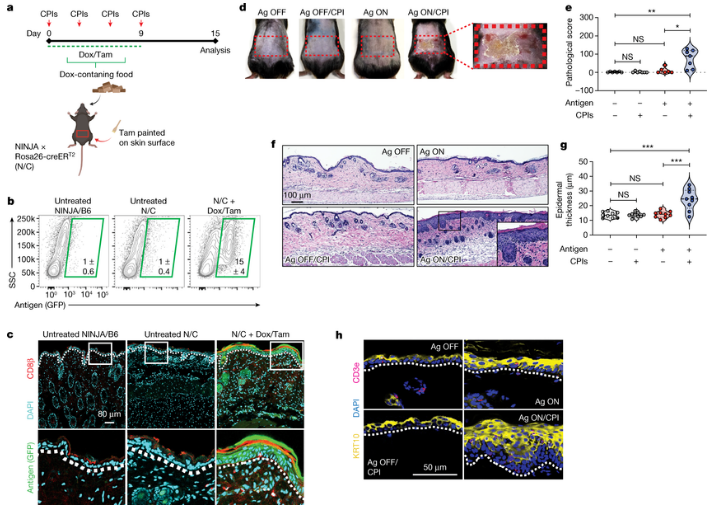
Image from:Nature (2023). DOI:10.1038/s41586-023-06217-y
Our study shows for the first time that PD-1 plays a key role in preventing T cells from attacking normal tissue in healthy individuals and may one day help scientists find new ways to reduce or prevent the side effects of immunotherapy, said researcher Professor Nikhil Josh. In this study, researchers developed a new generation of mouse models to address the role of PD-1 in preventing T cells from attacking healthy skin. They mimicked immunotherapy by blocking PD-1 and found that the mice developed some of the same skin disorders observed in cancer patients treated with PD-1 blockers; analysis of skin biopsies obtained from patients treated for cancer confirmed the findings obtained in the mouse organism.
The researchers' data in mice and humans support the hypothesis that checkpoint receptors such as PD-1 can play a gatekeeper role in maintaining tissue homeostasis by allowing functional T cells to be present in peripheral tissues without immunopathy. They propose that PD-1 blockade immunotherapy can interfere with these physiological regulatory functions, leading to adverse events, and this study also lays some groundwork for future scientists to develop improved immunotherapies that avoid adverse events.
Taken together, the results of this paper support a specific model of peripheral T-cell tolerance in which PD-1 allows antigen-specific effector CD8 T cells to coexist with antigen-expressing cells in tissues without immunopathological manifestations.