Immunotherapy based on immune checkpoint blockade (ICB) can use antibodies to induce rejection of tumors and provide clinical benefits for patients with a wide range of cancer types; however, tumors typically resist immune rejection and ongoing studies by researchers attempting to increase tumor response rates are based on combinations of IDBs and other compounds designed to reduce immune suppression in the tumor microenvironment, but when used as monotherapy is usually not very effective when used.
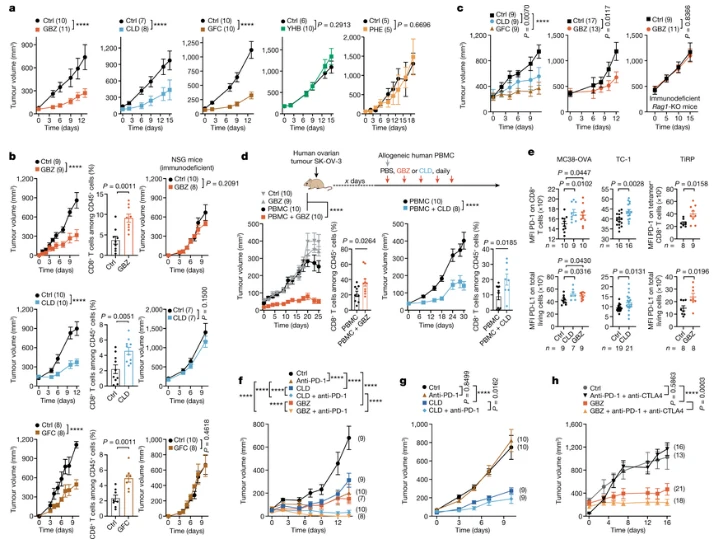
In a recent study published in the international journal Nature titled "Tumour immune rejection triggered by activation of α2-adrenergic receptors," scientists from the Ludwig Institute for Cancer Research and other institutions have used a combination of IDBs and other compounds to increase tumor response rates. Scientists from the Ludwig Institute for Cancer Research and other institutions have found that certain molecules previously used to treat hypertension may help the body's immune system better target cancer cells, and that future researchers may be able to significantly improve the effectiveness and applicability of cancer immunotherapy.
Today, immunotherapy is effective against only 30-40 percent of cancers, and many cancers are tolerant to therapy, mainly because the patient's body's T lymphocytes do not respond adequately, said researcher Benoit Van den Eynde, who found that drugs previously used to treat hypertension may be expected to help defend against many forms of cancer that are tolerant to immunotherapy. The immune system protects the body against disease by destroying foreign substances and pathogens, such as bacteria and viruses, and as a type of white blood cell, T lymphocytes are an active component of this process, recognizing and destroying seemingly foreign cells.
However, cancer cells are not foreign and therefore are not normally recognized and attacked by T lymphocytes, but about 30 years ago, researcher Thierry Boon and colleagues discovered that specific markers (tumor antigens) on the surface of cancer cells may be recognized by T cells and subsequently destroyed by T cells. This research may pave the way for the development of new cancer immunotherapies, a novel therapeutic strategy that helps T cells to destroy cancer cells, and thanks to the specificity of T cells and their memory for tumor antigens, immunotherapy has had some success in treating certain advanced cancers, which are now being used worldwide. However, such therapies are not equally effective in treating all patients or in fighting all types of cancer.
Specific blood pressure-lowering drugs may be able to enhance the efficacy of cancer immunotherapy.
In the current study, researchers say that anti-hypertensive drug molecules called alpha2-adrenergic receptor (alpha2AR) agonists also affect the behavior of macrophages, a special class of white blood cells that engulf and digest debris from pathogens such as cancer cells, microbes and foreign substances; at the time of this study, macrophages also alerted T cells to any abnormalities they encountered At the time of this study, macrophages were also able to alert T cells to any abnormalities they encountered, thus presenting the suspected antigen to the cells to induce a possible immune response. In addition, the investigators found that in addition to its known hypotensive and anesthetic effects, the α2AR agonist stimulated macrophages and acted as a sentinel, resulting in a stronger T-cell response and more effective rejection of cancer cells; most notably, this effect was extended to cancer models that were resistant to standard immunotherapy, which may suggest that this new approach could enhance the efficacy of clinical immunotherapy even in multiple types of cancer that are largely unresponsive to such interventions.
These findings may provide a theoretical basis for developing new molecules that might be combined with immunotherapy to improve its efficacy; researcher Van den Eynde believes that researchers might imagine using current blood pressure-lowering drugs, but this might carry some risk because of the adverse effects and toxicity of these drugs at the necessary doses; the other side of the coin is to develop new molecules that work in the same way to act on macrophages, but without producing unwanted toxic effects, and today researchers have made significant research progress in this direction. Taken together, the results of this paper suggest that α2AR agonists, some of which are already in clinical use, may be able to substantially improve the clinical efficacy of cancer immunotherapy.