Researchers from Semnan University of Medical Sciences, Iran, published a systematic review titled " Walking speed and the risk of type 2 diabetes: a systematic review and meta-analysis" in the BMJ sub-journal British Journal of Sports Medicine.
The study found that faster walking speeds were associated with a reduced risk of type 2 diabetes, with normal walking speeds (3-5 km/h) associated with a 15% reduction in diabetes risk, brisk walking (5-6.5 km/h) associated with a 24% reduction in diabetes risk, and very brisk walking (>6.5 km/h) associated with a 39% reduction in diabetes risk compared with casual walking (<3 km/h).
In this study, researchers meta-analyzed 10 studies that included a total of 508,121 adult participants to analyze the association between walking speed and type 2 diabetes risk.
Participants were categorized into 4 groups based on their walking speed: casual walking (<3 km/h), normal pace (3-5 km/h), brisk walking (5-6.5 km/h), and very fast walking (>6.5 km/h).
A total of 18,410 patients with type 2 diabetes were recorded during a mean follow-up period of 8 years.
The study found that normal walking speed (3-5 km/h) was associated with a 15% reduction in participants' risk of developing type 2 diabetes compared to casual walking, which corresponded to a reduction of 0.86 cases of type 2 diabetes per 100 people, regardless of the duration of the walk.
Brisk walking (5-6.5 km/h) was associated with a 24% reduction in the risk of diabetes compared to casual walking, equivalent to 1.38 fewer cases of type 2 diabetes per 100 people.
Very fast walking (>6.5 km/h) was associated with a 39% reduction in the risk of diabetes compared to casual walking, equivalent to 2.24 fewer cases of type 2 diabetes per 100 people.
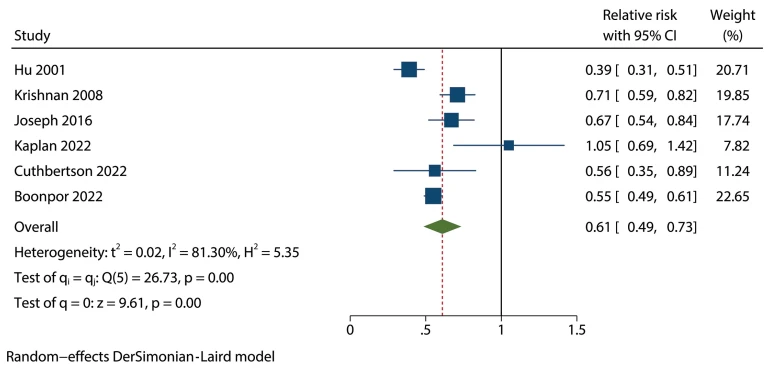
Relationship between very fast walking speed and diabetes risk
In addition, the researchers analyzed the dose-response relationship between walking speed and diabetes risk; for every 1 km/h increase in walking speed, the risk of diabetes was reduced by 9%, and the minimum walking speed to reduce the risk of diabetes was 4 km/h, which is equivalent to 87 steps per minute for men and 100 steps per minute for women.
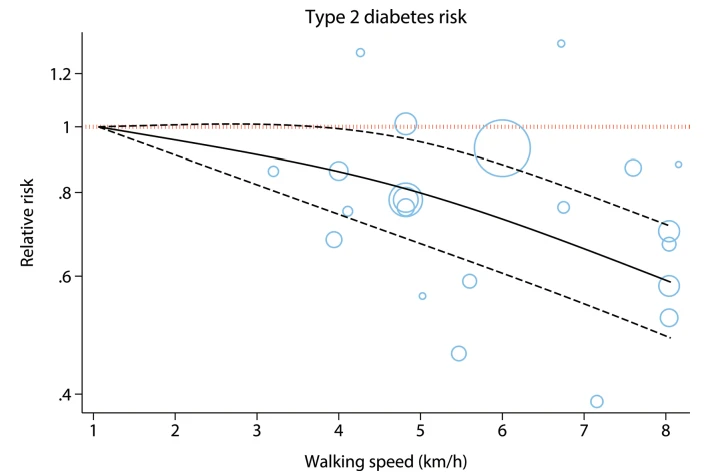
Dose-response relationship between walking speed and diabetes risk
In terms of the underlying mechanisms, the researchers say that first, walking speed is an important indicator of overall health and a key indicator of functional capacity.
Second, faster walking speed is associated with better cardiorespiratory fitness and muscle strength, which in turn are both associated with a lower risk of type 2 diabetes.
Third, faster walking speeds increase the intensity of exercise, which can produce greater stimulation of physiologic function and improve health.
Finally, brisk walking facilitates weight loss and helps improve insulin sensitivity.
It is worth mentioning that researchers from the University of Leicester, UK, published an article in the journal " Communications Biology" under Nature titled " Investigation of a UK biobank cohort reveals causal associations of self reported walking pace with telomere length".
The study showed a causal association between walking pace and telomere length, with faster walkers having longer telomeres. People who walked fast (>6.4 km/h) throughout their lives were 16 years younger biologically in middle age.
In summary, the study showed that faster walking speeds were associated with a lower risk of type 2 diabetes, regardless of walking time, and faster walking speeds were also associated with longer telomeres, with walking speeds of more than 4 kilometers per hour significantly reducing diabetes risk.