Idiopathic pulmonary fibrosis (IPF) is a chronic progressive interstitial lung disease with a median survival of 3 ~ 5 years.The pathophysiology of IPF is characterized by an abnormal accumulation of fibrotic tissue and destruction of alveolar structure, and it is commonly seen in the elderly male population. Currently, treatment options for patients with IPF are very limited. Exploring the molecular mechanisms underlying the pathogenesis of IPF is expected to provide new targets for the treatment of IPF.
Recently, researchers from Shandong University published an article entitled "Sohlh2 promotes pulmonary fibrosis via repression of p62/Keap1/Nrf2 mediated anti-oxidative signaling pathway" in Cell Death and Disease. The article entitled "Sohlh2 promotes pulmonary fibrosis via repression of p62/Keap1/Nrf2 mediated anti-oxidative signaling pathway" was published in the Journal of Death and Disease, which revealed that Sohlh2 promotes pulmonary fibrosis via repression of p62/Keap1/Nrf2 mediated anti-oxidative signaling pathway.
Disturbance of redox homeostasis in alveolar epithelial cells (AECs) is thought to be a cause of pulmonary fibrosis. The regulatory mechanism of redox hemostasis in the development of pulmonary fibrosis remains unclear. Using a type II aec-specific Sohlh2 conditional knock-in (CKI) mouse model, we found that Sohlh2, an essential HLH transcription factor, accelerates aging-associated lung fibrosis. A high-fat diet (HFD) led to a dramatic increase in lung inflammation and fibrotic changes in lung tissue in Sohlh2 CKI mice.
Sohlh2 overexpression resulted in significantly elevated ROS and apoptosis in lung, mouse primary AECIIs and human A549 cells, which were attenuated by a ROS inhibitor (NAC). sohlh2 enhances oxidative stress through inhibition of the p62/Keap1/Nrf2-mediated antioxidant signaling pathway. p62 serves as a direct target of Sohlh2, mediating the effects of Sohlh2 on ROS generation and apoptosis in A549 cells. Thus, the results of the present study elucidate the key mechanisms of oxidative stress-induced pulmonary fibrosis and provide a framework for intervention in aging-related diseases.
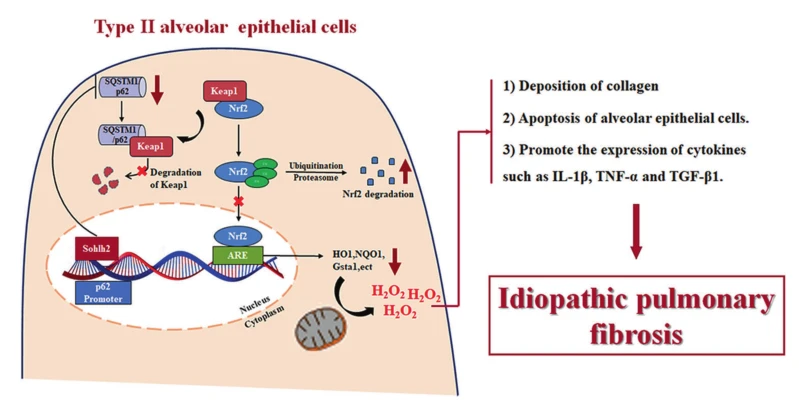
Sohlh2 promotes lung fibrosis by inhibiting activation of the p62/Keap1/Nrf2 signaling pathway and exacerbating oxidative stress in aeci
Image from: https://doi.org/10.1038/s41419-023-06179-z
In conclusion, the results of the present study identify a novel role for Sohlh2 in age-related and stress-induced fiber formation. The findings suggest that the Sohlh2/p62/Keap1/Nrf2 axis regulates ROS production under different conditions, thereby modulating inflammation, apoptosis and fibrogenesis in the lung. It was demonstrated that targeting Sohlh2 could prevent aging-associated and stress-related pulmonary fibrosis.