Fibrosis is associated with a wide range of chronic and life-threatening diseases, including pulmonary fibrosis, cirrhosis of the liver, kidney disease, and cardiovascular disease, which collectively account for a large portion of the mortality rate of developed populations, making fibrosis a serious health problem that requires close attention and forcing researchers to develop novel diagnostic and therapeutic approaches.
Recently, a study entitled "Iron accumulation drives fibrosis, senescence, and the senescence- associated secretory phenotype" was published in the international journal Nature Metabolism. In a recent study published in the international journal Nature Metabolism entitled "Iron accumulation drives fibrosis, senescence, and the senescence-associated secretory phenotype," scientists from the Institute of Biomedical Research (IBMB) in Barcelona, among others, describe the key role played by iron accumulation in the development of human fibrotic diseases, and in the study, they investigate the role of iron accumulation, senescence, and the senescence-associated secretory phenotype (SASP). senescence-associated secretory phenotype), a communication system in senescent cells that promotes the release of harmful molecules from the cell, in addition to its association with a number of age-related diseases, including fibrosis.
In this study, the researchers demonstrated the potential of iron detection by MRI, which may be used for non-invasive assessment of fibrosis burden in patients with renal fibrosis, and they also revealed the potential of specific compounds to remove accumulated iron, such as deferiprone, a clinically approved drug for the prevention of fibrosis, pointing to a new approach for the treatment of fibrotic diseases. disease. Our study identifies iron accumulation as a clinically exploitable driver of pathological aging and fibrogenesis, and paves the way for early detection and development of treatments for fibrotic diseases," said researcher Mate Maus. Researchers are currently investigating age-related metabolic changes that promote the development of chronic diseases and cancer in the body.
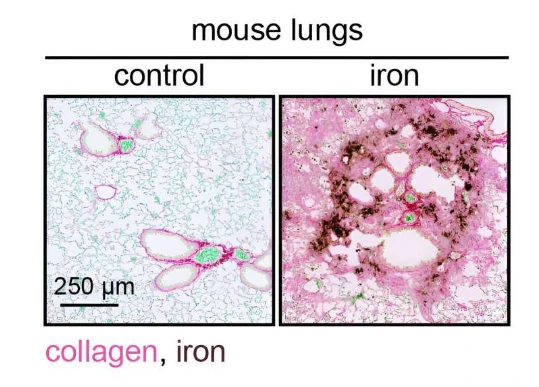
Iron accumulation may play a key role in the development of human fibrotic diseases.
Image credit: Nature Metabolism (2023). DOI:10.1038/s42255-023-00928-2
Previous studies have reported that iron accumulation is associated with the development of a variety of fibrotic diseases, and based on the findings in this paper, scientists believe that this may be a common feature of most fibrotic diseases.This study highlights two distinct roles for iron in the formation of fibrosis, firstly, its ability to show that excess extracellular iron initiates the onset of fibrosis. This might occur, for example, in fibrotic diseases associated with small vessel injury, where iron release from the vascular system may be a sustained trigger for fibrosis formation, and second, the results of this paper suggest that iron accumulation remains an intrinsic feature of senescent cells even at normal levels of extracellular iron, and that iron accumulation is a key event that drives SASP as well as its pro-fibrotic effects on the surrounding tissues.
By addressing iron accumulation in senescent cells, the researchers aim to slow SASP and thereby block the progression of fibrosis; the researchers say that while these findings mark an important step in scientists' understanding of fibrotic diseases, further research and clinical validation are especially important before translating these research insights into tangible therapies. Taken together, the findings in this paper suggest that iron accumulation plays an important role in aging and fibrosis (even though the initiating event may be independent of iron ions), and the researchers also identify iron metabolism that may serve as a potential therapeutic target for aging-related diseases.