As a global pathogen, Marek's Disease Virus (MDV) causes fatal infections in unvaccinated chickens, costing the poultry industry more than $1 billion annually.
In a new study, researchers from institutions including the University of Oxford in the United Kingdom and the University of Munich in Germany used ancient DNA to trace the evolution of MDV. The findings show how the virus evolved to become more virulent and hold the promise of developing better treatments for this viral infection. The findings are published in the December 15, 2023 issue of Science in a paper titled "Ancient chicken remains reveal the origins of virulence in Marek's disease virus."
These authors recovered and reconstructed ancient MDV genome sequences from archaeological chickens from the past 1000 years. By comparing the viral genomes from modern and ancient birds, they identified the genetic alterations that led to the increased virulence of the modern MDV.
Based on these ancient gene sequences, they were also able to utilize cytometry to recover ancient biological processes such that ancient MDV strains were much milder than modern MDV strains. This breakthrough not only sheds light on the evolutionary history of MDV, but also holds the promise of developing more effective therapies to combat this devastating poultry disease.
The new study is based on DNA isolated from chicken bones excavated from 140 archaeological sites in Europe and the Near East.These ancient MDV genomes show that MDV was widespread in European flocks at least 1,000 years before the disease was first described in 1907. This highlights the importance of preserving archaeological remains, especially given their ability to reveal valuable information about the evolution of viral virulence.
When the disease was first described, older chickens showed only mild symptoms. As chicken consumption increased dramatically in the 1950s and 1960s, MDV evolved and became increasingly aggressive, although several vaccines have been developed.
Dr. Steven Fiddaman of the Department of Biology at the University of Oxford, first author of the paper, said, "Our findings not only unravel the evolutionary history of MDV, but also provide the basis for our current deeper understanding of the virulence of this pathogen. By combining ancient DNA techniques with modern genomics, we have opened a window into the past that can guide future strategies for managing viral diseases."
Professor Naomi Sykes of the University of Exeter, co-author of the paper, said, "This new research emphasizes the far-reaching significance of biological materials preserved in archaeological and museum collections, as we cannot foresee how the study of them will have transformative applications in the future."
Prof. Laurent Frantz of the University of Munich, co-corresponding author of the paper, added, "Our study highlights the power of interdisciplinary collaborations, bringing together paleogeneticists, virologists, archaeologists and biologists to unravel the complex evolutionary history of a pathogen that has had a major impact on the economy and agriculture. "
We have seen that mitigating disease tends to create a selective pressure that enhances the virulence of such viruses," said Professor Greger Larson of the University of Oxford, co-author of the paper. By sequencing the genomes of ancient viruses, we were able to observe this process taking place, showing how dramatically MDV virulence has increased over the past century."
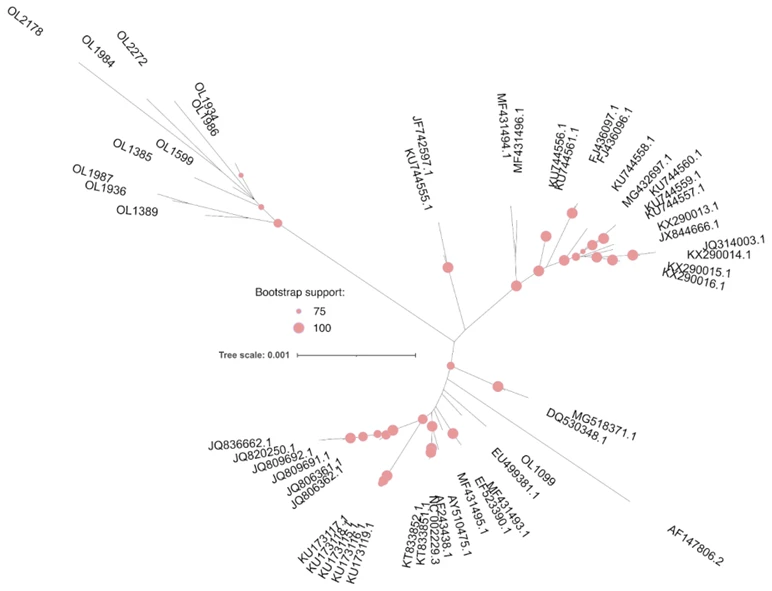
Image from Science, 2023, doi:10.1126/science.adg2238.
Professor Adrian Smith, co-corresponding author of the paper and from the Department of Biology at the University of Oxford, said, "The ancient DNA provides us with a unique insight into the emergence of MDV as a deadly chicken virus and may provide us with lessons applicable to the control of other viral infections of medical and veterinary importance. "
Prof. Venugopal Nair, co-author of the paper and Scientist Emeritus at the Pirbright Institute, said, "The findings in this paper on the origin of virulence, particularly in relation to the ancient MDV gene sequences, will provide tremendous scientific opportunities to explore the molecular mechanisms of virulence enhancement of this virus, which coincides with the emergence of the virus in the poultry farming industry since the 1960s. The intensive development of poultry farming since the 1960s."