The rising incidence of pancreatic cancer caused by obesity and type 2 diabetes is strongly associated with hyperinsulinemia, an independent cancer risk factor. Recently, an article published in the international journal Cell Metabolism entitled "Hyperinsulinemia acts via acinar insulin receptors to initiate pancreatic cancer by increasing In a recent study published in the international journal Cell Metabolism entitled "Hyperinsulinemia acts via acinar insulin receptors to initiate pancreatic cancer by increasing digestive enzyme production and inflammation," scientists from the University of British Columbia and other institutions revealed a direct link between high insulin levels, which are common in obese and type 2 diabetic patients, and the development of pancreatic cancer.
In the study, researchers explained in detail for the first time why people with obesity and type 2 diabetes have an increased risk of developing pancreatic cancer. It has been shown that excessive insulin levels can overstimulate pancreatic acinar cells, which produce digestive juices, and that this overstimulation leads to inflammation, which can transform these cells into pre-cancerous cells. With the rapid increase in obesity and type 2 diabetes, we are seeing an alarming rise in the incidence of pancreatic cancer in the population; these findings may help researchers to understand exactly what the mechanisms behind this are, and emphasize the importance of keeping insulin in a healthy range, which may be achieved through diet, exercise and, in some cases, medication," said researcher Professor James Johnson. of medications to achieve this.
In the article, the researchers focused on pancreatic ductal adenocarcinoma (PDAC), the most common form of pancreatic cancer, which is highly aggressive, with a five-year survival rate of less than 10 percent of patients, and which is currently on the rise, and is projected to become the second-leading cause of cancer-related deaths by 2030. Although obesity and type 2 diabetes have previously been identified as risk factors for pancreatic cancer, the exact mechanisms behind its occurrence were not clear to researchers, and in this study, researchers have revealed the important role that insulin and its receptors play in this process.
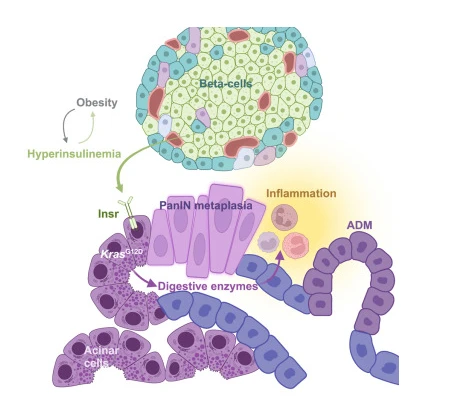
Scientists reveal a direct link between high insulin levels in the body and the development of pancreatic cancer.
Image credit: Cell Metabolism (2023). DOI:10.1016/j.cmet.2023.10.003
We found that hyperinsulinemia promotes pancreatic cancer through the insulin receptor in the alveolar cells, which involves mechanisms that include an increase in the production of digestive enzymes, which can lead to increased inflammation of the pancreas," said Dr. Anni Zhang. Although the role of insulin in regulating blood glucose levels in the body is widely recognized, this study highlights its importance in pancreatic alveolar cells, where findings suggest that insulin supports the physiological function of these cells in the production of digestive enzymes for the breakdown of lipid-rich foods, but that at high levels, the increase in insulin inadvertently promotes pancreatic inflammation and the development of precancerous cells. This finding may pave the way for the development of novel cancer prevention strategies, or even therapeutic approaches that target insulin receptors in alveolar cells.
The researchers hope that this study will change clinical practice and help advance lifestyle interventions to reduce the risk of pancreatic cancer in the general population, as well as help develop novel targeted therapies that modulate the insulin receptor to prevent or slow the progression of pancreatic cancer. The researchers then initiated a clinical trial through a joint study to help PDAC patients control their blood glucose and circulating insulin levels with the help of an endocrinologist. This finding may have implications for other cancers associated with obesity and type 2 diabetes, where elevated insulin levels may play an important role in disease progression. In the future, researchers hope to determine if and how excess insulin promotes other types of obesity and diabetes-driven cancers.
Taken together, the results of this paper reveal the molecular mechanisms behind the association linking obesity-driven hyperinsulinemia and pancreatic carcinogenesis.