Gastric adenocarcinoma (GAC) is a lethal disease with genomic and clinical heterogeneity; recently, in a study published in the international journal Molecular Cancer entitled "Clinically conserved genomic subtypes of gastric adenocarcinoma", scientists from the University of Texas MD Anderson Cancer Center and other institutions have developed a novel genetic classification system for gastric adenocarcinoma. Recently, in a study published in the international journal Molecular Cancer entitled "Clinically conserved genomic subtypes of gastric adenocarcinoma", scientists from the University of Texas MD Anderson Cancer Center and other institutions have developed a novel genetic classification system for gastric cancer, which is expected to lay a certain foundation for the development of individualized gastric cancer therapies.
Previously, the researchers also published a research article in the journal Hepatology related to the genetic classification system associated with hepatocellular carcinoma, which has a certain genetic and clinical diversity; the researchers analyzed the past published genetic classification system for eight types of gastric cancer, and a total of six Consensus Genomic Subtypes (CGSs) results were obtained, and the researchers found the results of the CGSs are not consistent with the genetic classification system. Subtypes), which can classify gastric cancers based on different gene expression patterns, from CGS1 to CGS6. Each subtype has different characteristics, with CGS1 being able to exhibit the worst prognostic features, with very high stem cell characteristics and low genetic modifications; however, the researchers' analysis confirms that CGS1 responds better to immunotherapy, and that therapies targeting the IGF1R may also be effective. therapies may also be effective, CGS2 is enriched in typical epithelial cell gene expression, and CGS3 and CGS4 have higher clone number variants and lower responses to immunotherapy.
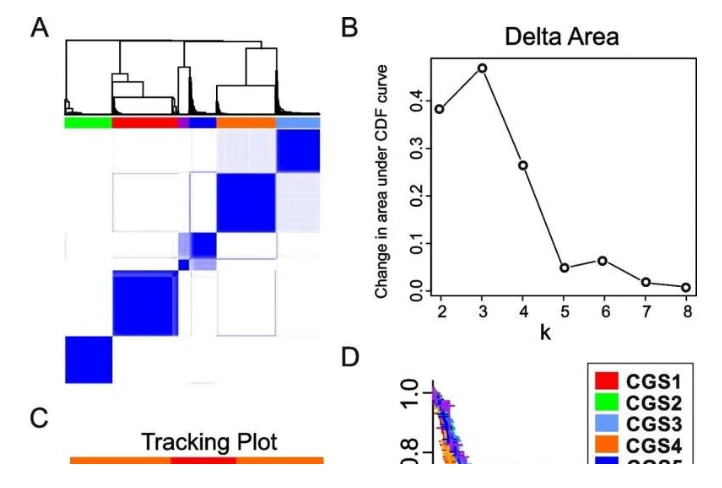
Scientists have successfully developed a novel genetic classification system for human gastric cancer.
Image From: Molecular Cancer (2023). DOI:10.1186/s12943-023-01796-w
Nevertheless, CGS3 is also characterized by activation of the HER2 gene, and CGS4 is characterized by activation of the SALL4 gene; the researchers suggest that therapies targeting these features may be effective, and that CGS5, which has a high mutation burden, which is characteristic of microsatellite instability in tumors, is moderately responsive to immunotherapies, while CGS6 shows a positive expression and high methylation levels for infectious mononucleosis virus (EBV, Epstein Barr virus), which also shows a high response to immunotherapy. (CGS6, which is positive for infectious mononucleosis virus (EBV, Epstein Barr virus) and has a high methylation level, also shows a high response to immunotherapy.
The researchers not only classified the genetics of gastric cancer, but also evaluated the potential response rate to standard and experimental treatments (radiotherapy, immunotherapy, etc.) for each subtype through systematic analysis of genomic and proteomic data; thus, the CGS3 subtype showed particular benefit in anticancer radiotherapy due to iron-dependent cell death caused by high levels of lipid peroxidation; related research may suggest potential therapeutic targets for each subtype.
Although the mortality rate of gastric cancer patients is decreasing due to the implementation of novel therapies, it is still one of the leading causes of death in cancer patients, and we believe that the study herein may provide a foundation for the development of novel individualized gastric cancer therapies at a later stage, said researcher Professor Sun Young Yim. Taken together, this novel consensus subtype may help generate a robust classification system that provides additional features for customized subtype-based interventions.