Recently Prof. Chunfu Zheng and Prof. Bangladesh published the review " Emerging Health Implications of Climate Change: Dengue Outbreaks and Beyond in Bangladesh" in Lancet Microbe (Emerging Health Implications of Climate Change. Dengue Outbreaks and Beyond in Bangladesh".)
The ferocious surge of dengue fever in Bangladesh in 2023 is undeniably and directly linked to the pattern of climate change, revealing the complex linkages between environmental changes and public health impacts. As of October 28, 2023, an alarming total of 1,327 dengue-related deaths have been recorded across the country, of which 265,862 were battling the infection, thus making this year the most catastrophic since the 2000 dengue epidemic was recorded. Considering this severity, this year's death toll far exceeds the previous year's figure, almost quadrupling the 281 dengue-related deaths.
Traditionally, dengue outbreaks have manifested themselves within urban forts, mainly in cities such as Dhaka. Nonetheless, 2023 reveals a clear epidemiologic trend, with the dengue virus casting an insidious shadow in every district, penetrating even the most idyllic rural areas. This generalized spread of the disease calls for increased epidemiological vigilance, especially in hitherto unaffected areas. The relentless climate crisis is at the center of discussions on the rising prevalence of dengue. Widespread global warming has accelerated the geographic expansion of Aedes aegypti, the primary vector of dengue. This ecological shift is not unique to dengue's predicament; a range of mosquito-borne diseases, including Zika, chikungunya, and yellow fever, have also seen alarming territorial spread, with surges of cases in regions from South America to Asia and Africa
The World Health Organization and Bangladeshi health officials have been strengthening the healthcare system with a focus on disease surveillance, clinical care, vector control and risk communication. At the same time, Bangladeshi health experts have emphasized prioritizing dengue prevention and improving infrastructure to meet the growing demand for medical services and timely disease detection. Immediate medical interventions and preventive measures are critical, and a harmonized global approach to the climate crisis is essential. We cannot afford inaction or a piecemeal response.
The dengue outbreak highlights the tumultuous events of 2023, a sad testament to the multifaceted challenges that climate change is likely to bring. These numbers are not just statistical anomalies, but symbols of real human suffering. They serve the dual function of being a profound reflection of our contemporary vulnerabilities and an urgent call for a coherent and proactive global response.
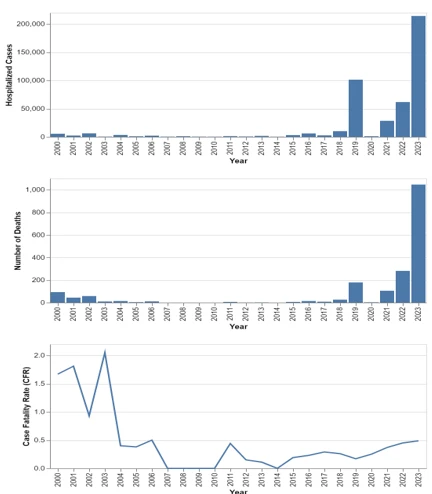
Figure 1. Trends in dengue outbreaks in Bangladesh (2000-2023).