In recent years, the global consumption of sugary drinks has been increasing. At the same time, there is evidence that high consumption of sugary drinks will lead to increased risk of obesity and related diseases, type 2 diabetes and cardiovascular diseases. It is estimated that 184000 deaths worldwide each year can be attributed to sugary beverages, and the consumption of sugary beverages is also considered one of the largest behavioral risk factors for global mortality.
According to the "Dietary Guidelines for Chinese Residents," the definition of sugary beverages is that beverages containing more than 5% sugar are artificially added during the production process. Common sugary beverages include soft drinks, juice, sports drinks, sweetened coffee and tea, milk tea, etc.
Hair loss has always been a very troublesome problem for humans. Nowadays, hair loss, baldness, and elevated hairlines have become the norm for many young people. Epidemiological surveys show that the prevalence of androgenic alopecia in China is 21.3% for males and 6.0% for females, with a trend of increasing year by year and developing at a younger age.
Recently, researchers from Tsinghua University published a research paper titled "The Association between Sugar Sweetened Beverages and Male Pattern Hair Loss in Young Men" in the nutrition journal "Nutrients".
This study shows that every sip of sugary beverage is pulling away your hair. Consuming more sugary beverages is associated with an increased risk of male type hair loss among young Chinese people. Compared to those who do not drink sugary beverages, drinking more than 7 times a week (>3500 milliliters) increases the risk of male type hair loss by 3.36 times.
In this study, researchers recruited 1028 male participants with an average age of 27.8 years from 31 provinces in China, including 436 normal participants and 592 male type hair loss participants. Analyzed the association between sugary beverages (SSB) consumed by young men and male type hair loss (MPHL).
According to the frequency of participants' consumption of sugary beverages, participants were divided into four groups: never drinking, 1-4 times per week (1-1500 milliliters per week), 4-7 times per week (1500-3500 milliliters per week), and>7 times per week (>3500 milliliters per week).
Overall, for all participants, 44.6% consumed sugary beverages more than 7 times a week, 25.1% consumed them 4-7 times a week, 18.5% consumed them 1-3 times a week, and 11.8% never consumed them.
Research has found that men who consume more sugary beverages are more likely to suffer from male type hair loss. Compared to people who do not drink sugary beverages, drinking more than 3500 milliliters (>7 times) per week increases the risk of male hair loss by 3.36 times.
After adjusting for other risk factors, researchers found that drinking more than 3500 milliliters (>7 times) per week was still significantly associated with male type hair loss, with a 1.78-fold increase in risk compared to those who did not consume sugary beverages.
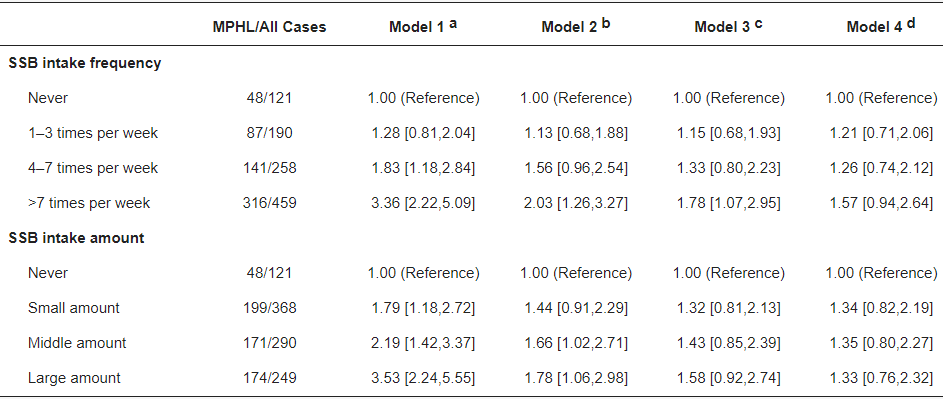
The relationship between sugary beverages and the risk of male hair loss
Importantly, analysis of different types of beverages found that regardless of which type of sugary beverage was consumed, there was a significant correlation with male type hair loss, especially in fruit juice drinks, soft drinks, sports drinks, and sweetened tea drinks.
Finally, the researchers conducted a mediation analysis using anxiety disorder status and disease history as mediators to determine how sugary beverages increase the risk of male type hair loss.
It was further found that there was a mesomeric effect between the intake of sugary drinks and male type hair loss caused by chronic diseases and anxiety. For example, there is a certain correlation between the frequency of sugary beverage intake and anxiety disorder, as well as between anxiety disorder and male type hair loss.
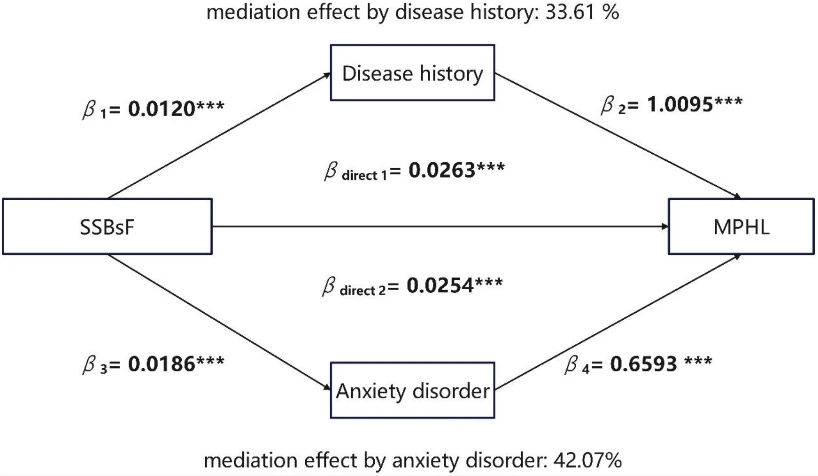
Mesomeric effect between disease history and anxiety state
In summary, research has found that a higher level of intake of sugary beverages is associated with an increased risk of male type hair loss among young Chinese people. Anxiety disorder status and disease history may mediate the association between sugary beverage consumption and male type hair loss.
Research reminds people to reduce their intake of sugary beverages, which are potential modifiable risk factors for many diseases. All of this indicates that sugary beverages have no nutritional value and can lead to obesity, cardiovascular disease, and even rip off your hair.